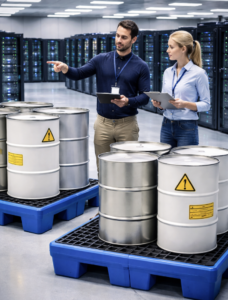
IT operations is often discussed as if it begins and ends with servers, networks, monitoring dashboards, and ticket queues. In reality, strong IT operations depends on the full environment that supports uptime, continuity, and fast response. Industry definitions of IT operations consistently include the delivery and support of IT services, as well as infrastructure, incident response, disaster recovery, and environmental management. That wider scope matters because the physical setting around digital systems can either protect performance or quietly introduce risk. IBM’s explanation of IT operations, TechTarget’s definition of IT operations, and Gartner’s infrastructure and IT operations leadership research all reflect that broader view of modern ITOps.
That is exactly why storage and containment solutions deserve a place in the conversation. In many IT environments, teams work near generator support areas, battery backup systems, maintenance supplies, janitorial materials, HVAC support zones, and other operational spaces where liquids or chemical products may be stored. When those materials are organized poorly, the result is not just a housekeeping problem. It can become a workflow issue, a safety issue, and eventually a downtime issue. Using Drum Pallets in the right places helps create cleaner, safer, and more controlled environments that support the larger mission of IT operations.
IT Operations Depend on More Than Digital Tools
The modern IT function is under pressure to keep services available, reduce incident noise, improve resilience, and move from reactive fixes to more proactive operations. That is one reason the industry continues to emphasize observability, automation, and AIOps. Red Hat’s explanation of AIOps describes how AI-driven operations can help teams automate complex monitoring and decision-making, while a recent Cisco observability strategy case study highlights how better visibility can reduce major incidents and improve operational response. In other words, IT leaders are trying to eliminate blind spots. Physical work areas should not remain one of the blind spots that gets ignored.
A well-run IT environment is built on consistency. Teams need predictable access paths, orderly supply storage, cleaner maintenance areas, and fewer unnecessary hazards around critical systems. When drums or liquid containers are kept directly on the floor, stored without containment, or placed in a way that disrupts access, the environment becomes harder to inspect, harder to clean, and harder to manage. Drum pallets support operational discipline by creating designated storage zones that help teams keep maintenance-related materials in the right place instead of allowing them to become part of the daily clutter around infrastructure.
Safety Problems in IT Spaces Become Business Problems Fast
In IT operations, a small physical issue can create a much larger business consequence. A leak near support equipment, a slippery maintenance area, or blocked access around critical infrastructure can delay response time when teams need to act quickly. Even when the incident does not damage equipment directly, it can disrupt maintenance schedules, slow vendor access, complicate inspections, and create avoidable exposure in spaces that should feel controlled and dependable. This is why operational resilience cannot be treated as a digital-only priority. It includes the physical conditions surrounding the systems that keep a business running.
That mindset aligns with the wider resilience and risk guidance being pushed across the industry. CISA cybersecurity best practices emphasizes disciplined operational habits, system hygiene, and resilience as part of protecting organizational continuity. While cybersecurity and spill containment are different subjects, they are connected by the same principle: unmanaged risk compounds quickly. In a mature operations culture, teams do not wait for a preventable problem to grow legs. They reduce the chance of disruption before it becomes an incident report, a delay, or a financial hit.
Drum pallets fit naturally into that kind of culture. They provide secondary containment, improve organization, and make it easier to separate stored materials from walkways and active equipment zones. That matters in server-adjacent facilities, colocation support areas, warehouse-connected technology environments, and any setting where IT teams share space with building operations or maintenance functions. Clean containment supports safer footing, more orderly workflows, and stronger confidence in the environment as a whole.
Where Drum Pallets Make Sense in IT Environments
Not every IT company stores industrial materials in the same way, but many technology environments still rely on physical infrastructure that requires fluids, chemical products, or maintenance supplies. Backup power systems, generator support, battery rooms, cooling support areas, facilities closets, and mixed-use operational spaces can all become points where containment matters. The broader IT operations field includes responsibility for infrastructure availability, reliability, and environmental conditions, which is why these support zones should be treated as part of the operational picture rather than as somebody else’s problem.
When drum pallets are used in these spaces, they help create clearer storage boundaries. That makes routine inspection easier. It also helps vendors, facilities personnel, and internal teams see at a glance where materials belong and where they do not. In operations, visual clarity is not cosmetic. It reduces wasted time, lowers confusion, and supports faster action when something needs to be checked, replaced, moved, or addressed. The same thinking that drives better dashboards and better alerts should also drive better physical organization.
Efficiency in IT Operations Is Often Built in the Background
One of the biggest mistakes companies make is defining efficiency too narrowly. Efficiency is not only about faster ticket resolution or stronger automation. It is also about reducing the quiet friction that slows teams down every day. That includes searching for supplies, navigating around poor storage decisions, dealing with preventable messes, or waiting for maintenance areas to be made safe before work can continue. A controlled storage setup helps remove those little interruptions that add up over time.
This is where physical containment supports digital performance. If the IT team is responsible for uptime and continuity, anything that helps the environment stay orderly contributes to that mission. Drum pallets support cleaner workflows by giving stored materials a proper home, reducing floor-level disorder, and making maintenance spaces easier to manage. They also help create a more professional operating environment for internal staff, outside contractors, auditors, and leadership teams who want to see evidence of control rather than signs of improvisation. In a world where operations teams are being pushed toward proactive management, even these behind-the-scenes details matter.
Why This Topic Belongs on an IT Website
Some people still think physical containment belongs only on industrial websites, but that view is too narrow for the way modern organizations actually operate. Information technology is not just software and screens. As Wikipedia’s overview of information technology reflects, IT spans the systems and technologies used to create, process, store, and transmit information. Once businesses depend on those systems every hour of the day, the environments that support them become part of the bigger conversation about reliability, resilience, and risk management.
That makes this topic highly relevant for IT-focused content. A strong IT website should not only talk about cloud migration, security policy, observability, or automation. It should also reflect the real-world conditions that affect operational continuity. Articles like this help demonstrate a more mature understanding of what keeps technology running in practice. They connect digital strategy to physical preparedness, which is exactly the kind of grounded, useful content that earns trust from readers who are responsible for real systems, real teams, and real operational outcomes.
Conclusion
Drum pallets support safety and efficiency in IT operations because they help protect the environment around critical systems. They reduce disorder, support containment, improve access, and make support spaces easier to manage with consistency. In a field where uptime, resilience, and rapid response matter, that kind of operational discipline has real value.
The strongest IT operations teams do not separate physical order from technical excellence. They understand that clean environments, controlled storage, and fewer preventable hazards all contribute to the same goal: stable performance and smoother execution. When companies treat storage and containment as part of the operational standard instead of an afterthought, they build an environment that supports both people and infrastructure more effectively.